
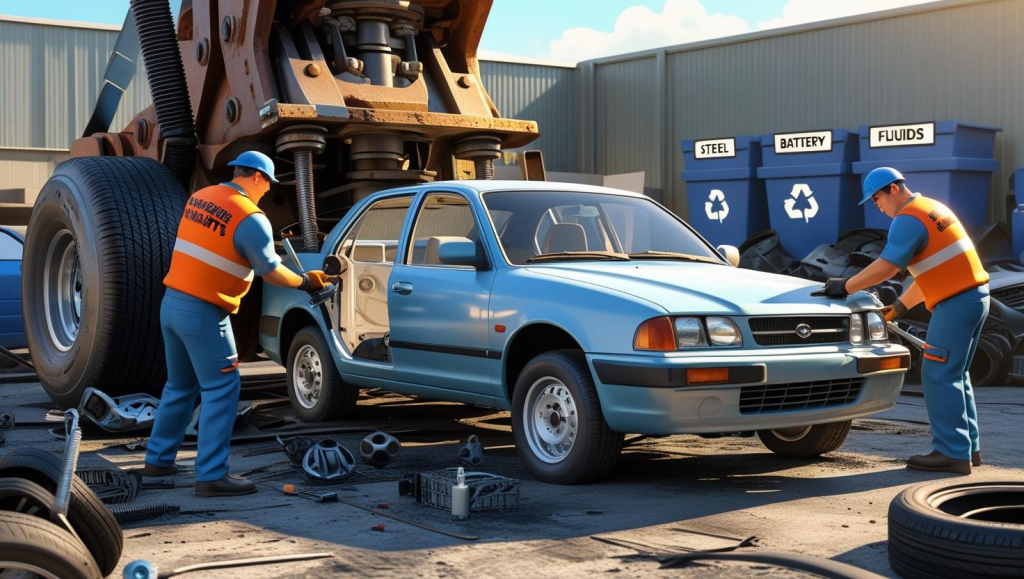
When you finally sell your junk car, it may feel like the end of the road for that old vehicle — but it’s actually the start of an interesting journey. Many car owners wonder: what happens to your junk car after you sell it?
At CashnCarryParts, we believe in full transparency. From the moment we tow your vehicle to the final step of eco-friendly recycling, every action is traceable, responsible, and part of a bigger mission to reduce automotive waste.
👉 New to selling junk cars? Read the full roadmap here: The Ultimate Guide to Selling Your Junk Car for Cash
In this blog, we’ll walk you through the complete process — from inspection and dismantling to recycling, repurposing, and safe disposal — and show how your old car contributes to a cleaner, more sustainable world.
💡 Key takeaways
- Selling a junk car is not the end of its life — it starts a process of inspection, dismantling, recycling, and responsible disposal.
- After selling, the vehicle goes through these main steps:
- Inspection: Professionals check the car to identify reusable and valuable components.
- Dismantling: Usable parts are removed, tested, and prepared for resale or reuse.
- Recycling: The remaining metal frame is crushed and materials like steel, aluminum, and copper are recovered.
- Repurposing: Recycled materials are used to create new products and support a circular economy.
- Safe Disposal: Fluids, batteries, airbags, and other hazardous materials are handled properly.
- Parts that may still have value include:
- Engines
- Transmissions
- Batteries
- Alternators
- Tires
- Mirrors
- Doors
- Electronics
- Recycling junk cars helps reduce waste, recover valuable materials, and limit the need for new raw materials.
- Selling a junk car allows owners to earn money while ensuring the vehicle is reused or recycled responsibly.
- CashNCarryParts follows a structured process to recover useful parts and handle vehicle recycling in an eco-friendly way.
Steps in the full Process
1. Inspection: Assessing Value & Usable Parts
Before anything happens, your car is thoroughly inspected by professionals at the salvage yard or recycling facility. This step identifies which parts are still in good condition and can be resold or reused.
- Functional parts like engines, transmissions, batteries, and alternators are tested.
- Tires, mirrors, and even stereo systems are considered for resale.
- This assessment determines how much value can be recovered from the vehicle.
2. Dismantling: Salvaging Reusable Parts
Once the inspection is complete, the usable components are removed.
- Engines, tires, doors, and mirrors are taken out.
- These parts are sold to repair shops, car owners, or auto part resellers.
- Dismantling maximizes the car’s value and minimizes waste.
🟡 Did You Know? Some parts from junk cars are exported to developing countries where they’re reused in secondhand markets.
3. Recycling: Crushing & Reprocessing the Metal Frame
After all valuable parts are removed, the remaining metal shell is crushed and sent to recycling facilities.
- Steel, aluminum, and copper are extracted and melted down.
- These materials are used to manufacture new cars, appliances, and buildings.
- Recycling helps reduce mining and supports the circular economy.
4. Repurposing: Giving Junk Cars New Life
Recycled car materials are often repurposed into surprising new products.
- Steel may go into skyscrapers or railway tracks.
- Plastic interiors can be melted and reused for new car dashboards or furniture.
- Even old car batteries can be repurposed in energy storage systems.
This step shows that even a junk car can have a new purpose beyond the road.
5. Safe Disposal of Hazardous Materials
Junk cars often contain fluids and materials that can harm the environment if not handled properly. During the dismantling process, these are safely extracted and disposed of.
- Motor oil, coolant, transmission fluid, and brake fluid are drained.
- Batteries are treated as hazardous waste and disposed of at special facilities.
- Airbags, mercury switches, and refrigerants are also handled carefully.
✅ This ensures your junk car doesn’t leave behind toxic waste that pollutes soil and water.
Conclusion
So, what happens to your junk car after you sell it? It goes through a well-planned process involving inspection, dismantling, recycling, repurposing, and safe disposal. Your old vehicle still has value — not just in parts, but in its ability to support green practices and the circular economy.

